
Safe Inhalation Methods with Eucalyptus and Peppermint for Seasonal Congestion
Aromaterapia offers simple, comforting ways to support the respiratory system during cold, dry, or high-pollen seasons. When congestion makes every breath feel blocked, the cooling aroma of eucalyptus and peppermint can create a sense of openness and relief. While neither oil can cure an infection or replace medical care, thoughtful inhalation may help you feel more comfortable and support clear breathing at home.
Why Eucalyptus and Peppermint Feel Helpful
Eucalyptus oil is known for its fresh, camphor-like aroma. Many people associate the scent with the feeling of a clearer nasal passage, especially during seasonal colds. Peppermint oil has a bright, cooling character that can make inhalation feel more vigorous and refreshing. Together, the two oils create a balanced aroma: eucalyptus adds depth, while peppermint brings a crisp, cooling lift.
The sensation is partly related to the way aromatic compounds interact with the trigeminal nerve endings in the nose and airways. This can create a perception of increased airflow even when physical swelling has not changed quickly. That sensory effect can be soothing, particularly at night or during long periods of dry indoor air.
Choose Safe Inhalation Methods
The safest approach is indirect inhalation, which keeps the oils away from direct contact with skin and mucous membranes. These methods are gentle, practical, and easy to adjust to your comfort level.
Steam Inhalation
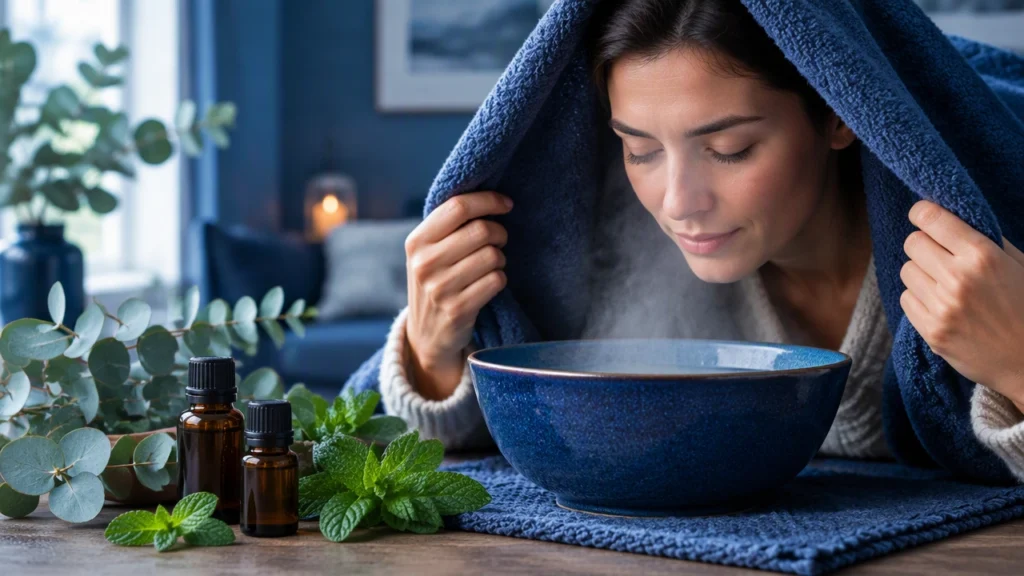
Eucalyptus and peppermint oil steam inhalation for congestion relief is a classic method. Boil water and pour it into a heat-safe bowl. Add only one or two drops of eucalyptus oil and one drop of peppermint oil. Lean over the bowl at a comfortable distance, keeping your eyes closed, and drape a towel loosely over your head to create a gentle tent of steam.
Inhale slowly through the nose for five to ten minutes. Keep the steam warm, never hot, and stop if you feel irritation, dizziness, or discomfort. This method should be used by adults and older children who can follow safety instructions carefully. Never lean directly over boiling water, and keep the bowl on a stable surface away from the edge.
Diffusion in a Well-Ventilated Room
A cool-air diffuser is a convenient option for continuous, gentle aroma. Add three to five drops of essential oil in total, using less if the room is small. Run the diffuser for thirty to sixty minutes, then open a window or door to refresh the air. People who share the space should be comfortable with the scent; animals, children, and sensitive individuals may respond strongly to concentrated fragrance.
A Personal Inhaler
Aromatherapy inhalers are small, portable devices that hold a scented wick without releasing oil into the room. Place one or two drops of each oil on the wick, close the container, and inhale gently through the nostrils when needed. This method is discreet and reduces exposure for people nearby, making it useful at work, on public transport, or during travel.
Aromatic Bath or Warm Compress
For a relaxing evening ritual, add a single drop of each oil to a tablespoon of carrier oil or bath gel before adding it to a warm bath. The oil should never be poured directly into the water, where it can spread undiluted across the surface. A warm compress can also be prepared by adding one drop of eucalyptus to a bowl of warm water, soaking a cloth, and holding it near the chest or neck while avoiding the eyes.
Simple Safety Guidelines
- Use small amounts. More oil does not mean faster relief. One or two drops are usually enough for a bowl of steam or a personal inhaler.
- Do not ingest essential oils. Eucalyptus and peppermint are intended for aromatic use, not swallowing, unless under the direct supervision of a qualified professional.
- Keep oils away from the eyes. Aromatic particles can irritate the eyes and sensitive mucous membranes.
- Test for sensitivity. If you are new to either oil, try a brief, mild exposure and stop if you notice headache, nausea, coughing, or skin irritation.
- Store oils safely. Keep bottles tightly closed, away from heat and sunlight, and out of reach of children.
Who Should Be Cautious
Peppermint and eucalyptus are not appropriate for everyone. Babies and young children may be more sensitive to strong aromatic compounds, so avoid using these oils around infants and consult a pediatric professional before using them with young children. Pregnant or breastfeeding individuals, people with asthma, epilepsy, chronic respiratory conditions, or significant allergies should seek individualized advice before starting regular aromatherapy.
People who use medication for breathing problems should continue their prescribed treatment and treat inhalation as a comfort measure rather than a replacement. If congestion is severe, lasts more than ten days, or comes with high fever, facial pain, wheezing, or difficulty breathing, speak with a healthcare professional.
A Gentle Daily Routine
During the seasonal transition, combine aroma with other supportive habits. Keep indoor air from becoming excessively dry, drink plenty of water, and use a saline nasal rinse if it is part of your normal care routine. A short steam session in the morning and a diffused room in the evening can create a calm rhythm without overexposing the senses.
For best results, use the oils in short sessions rather than continuously. Fresh air, gentle movement, and adequate rest work alongside aromatherapy to support recovery and comfort.
Conclusion
Eucalyptus and peppermint can make seasonal congestion feel more manageable when used through safe, indirect methods. Whether you choose steam, diffusion, a personal inhaler, or a warm compress, start with a small amount, respect your body’s signals, and keep medical care in view when symptoms are persistent or concerning. With mindful use, aromatherapy can become a quiet, reassuring part of your clear-breathing routine.