Morning and Evening Aromatherapy Rituals for Natural Stress Relief
Stress rarely arrives with warning. It builds in the shoulders, the breath, and the pace of the day. One practical way to interrupt that buildup is through morning and evening aromatherapy rituals for natural stress relief, using scent, breath, and light stretching to set a calmer tone from the start and ease the body at night. If you are new to aromaterapia, think of it as a simple, sensory routine: choose a scent, pair it with a breath pattern, and add small movements that feel good rather than demanding.
The goal is not perfection. The goal is consistency. A few minutes in the morning and a few minutes at night can help you notice your body sooner, breathe more fully, and move with a little more ease. Over time, these small anchors become reliable tools for natural stress relief.
Why scent, breath, and movement work together
Scent reaches parts of the brain linked to memory and emotion, which is why a familiar aroma can shift your mood quickly. Breath influences the nervous system: slower, steadier breathing often encourages a calmer state. Gentle movement releases tension held in muscles and joints, helping the body feel safer and more settled. When you combine all three, you create a layered cue that tells your body it is time to wake up with intention or wind down with care.
This layered approach is also flexible. You can practice it at home, in a hotel room, or at your desk. You can adapt it to five minutes or stretch it to twenty. The essentials are the same: a scent you trust, a breath you can follow, and a few movements that feel supportive.
Morning ritual: a gentle energizing start
The aim of the morning practice is to awaken the senses without adding pressure. You are not chasing energy; you are inviting it.
- Choose a bright, clean scent. Citrus oils like orange, grapefruit, or lemon are often described as uplifting. Herbal notes like rosemary or peppermint can feel clarifying. Pick one or two that feel fresh to you.
- Set a simple breath pattern. Try inhaling for a count of four and exhaling for a count of four. Keep the breath smooth and quiet.
- Add light stretching. Focus on movements that feel easy: neck rolls, shoulder shrugs, side bends, and gentle spinal twists.
Five-minute morning sequence
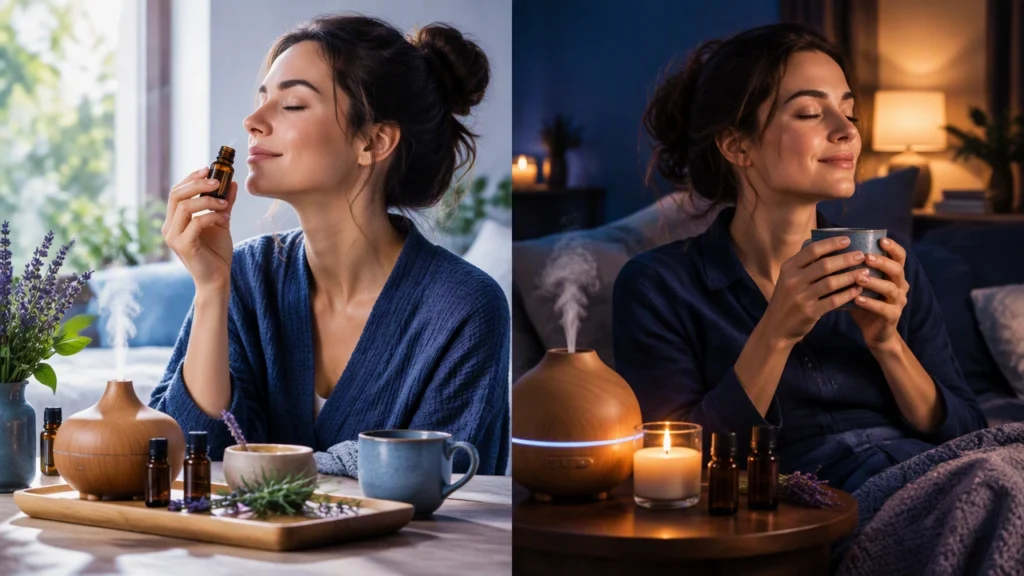
Place one drop of your chosen citrus or herbal blend on a tissue or in a small dish near your mat or chair. If you prefer a diffuser, run it on a low setting so the scent is present but not overwhelming. Stand or sit tall, close your eyes, and take three slow breaths, noticing the aroma as you inhale. Then move through the following:
- Neck and shoulders. Slowly tilt your head side to side, then roll your shoulders forward and back five times. Let the exhale soften any tight spots.
- Side stretch. Reach one arm overhead and lean gently to the opposite side, holding for two breaths. Switch sides. Feel the space you create along the ribs.
- Spinal twist. Sit or stand tall, place one hand on the opposite knee, and rotate gently. Hold for two breaths, then switch. Keep the movement small and comfortable.
- Final breath. Return to center. Inhale through the nose for four, exhale through the mouth for six. Notice how you feel compared to when you started.
Keep your scent choice consistent for a week or two. Repetition helps your body recognize the cue, making the ritual feel more effective over time.
Evening ritual: a soft wind-down
The evening practice is about releasing the day. Choose scents that feel warm or grounding, such as lavender, cedarwood, or sweet orange. Avoid anything too stimulating late at night, and keep the light soft.
- Create a calm space. Dim the lights, put your phone out of reach, and set a diffuser with a calming blend. If you do not have a diffuser, place a drop of oil on a cotton pad near your pillow.
- Lengthen the exhale. Try inhaling for four and exhaling for six. This simple shift often helps the body feel more settled.
- Move gently. Focus on slow, steady stretches that release tension from the day.
Ten-minute evening sequence
Begin with two minutes of quiet breathing. Then move through the following stretches, holding each for three to five breaths:
- Forward fold. Stand or sit and fold gently from the hips, letting the head and arms hang. Keep the knees soft. Feel the back body lengthen.
- Seated side bend. Sit cross-legged or on a chair, place one hand on the floor, and reach the other arm overhead. Breathe into the side body, then switch.
- Supine twist. Lie on your back, draw one knee across the body, and let the shoulders stay grounded. Switch sides after a few breaths.
- Rest. Place one hand on your belly and one on your chest. Breathe naturally and notice the rise and fall under your hands.
If your mind is busy, try a simple scent anchor: inhale the aroma slowly and count the exhale. When thoughts arise, return to the breath and the scent. No need to judge the process; just keep coming back.
Safety and mindful use
Use essential oils thoughtfully. Dilute them in a carrier oil if they will touch the skin, and do a small patch test if you are trying a new oil. Avoid applying strong oils near the eyes. Some oils, such as citrus, can make skin more sensitive to sunlight, so keep that in mind if you plan to be outdoors. If you are pregnant, nursing, or managing a health condition, check with a qualified professional before using essential oils. Always choose high-quality products from trusted sources, and store them safely out of reach of children and pets.
Remember that aromatherapy is a complement to other healthy habits. It is not a cure, and it is not a replacement for medical care. It is a simple, sensory practice that can support your routine and help you feel more grounded.
Tips to make the rituals stick
Consistency matters more than length. Start with five minutes in the morning and ten minutes at night, and adjust as needed. Keep your oils, diffuser, and a mat or chair in the same spot so the ritual is easy to begin. Track how you feel after each session, even with a quick note. Over time, you will see patterns: which scents help you wake up, which stretches release your favorite tension spots, and which breath patterns feel most natural.
You can also add small anchors throughout the day. A drop of citrus on a tissue before a meeting, a quick shoulder roll between tasks, or a slow breath before you check your phone can carry the calm of your ritual into ordinary moments.
With a little practice, morning and evening aromatherapy rituals for natural stress relief become more than a routine. They become a reliable way to meet your day with clarity and close it with ease, one breath, one scent, and one gentle stretch at a time.