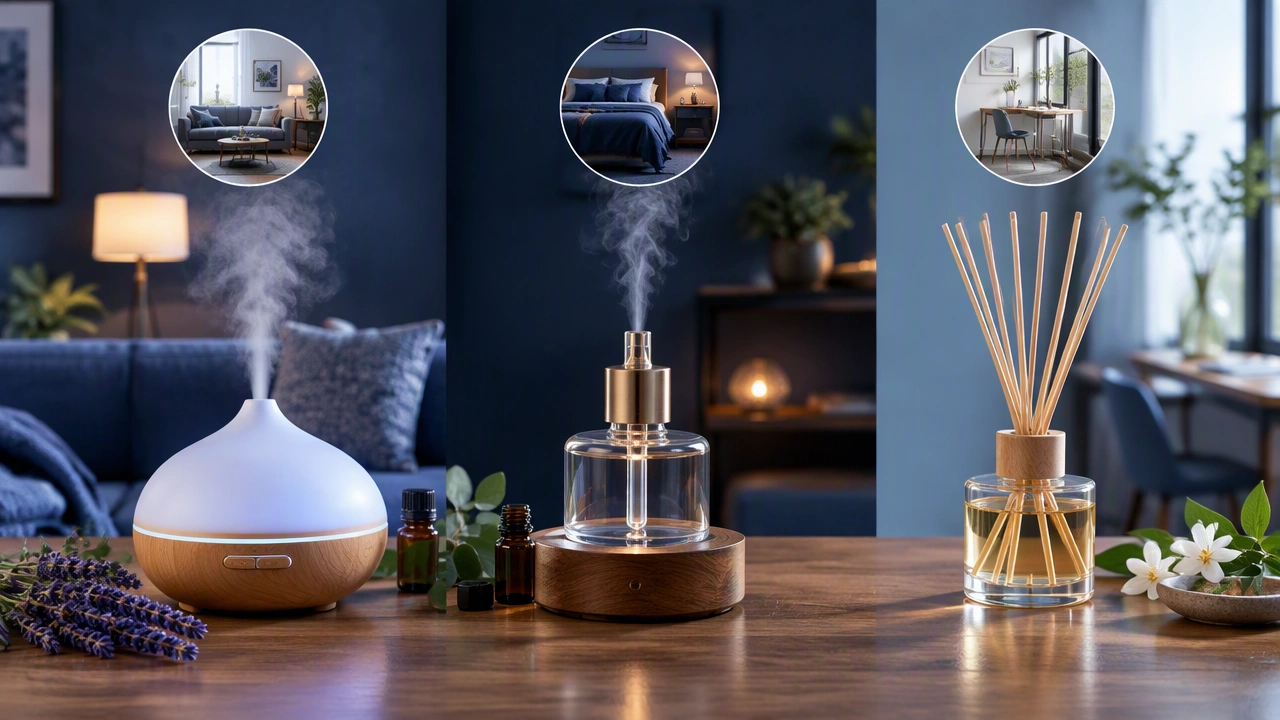
A practical comparison of ultrasonic, nebulizing and reed diffusers for different room sizes and needs
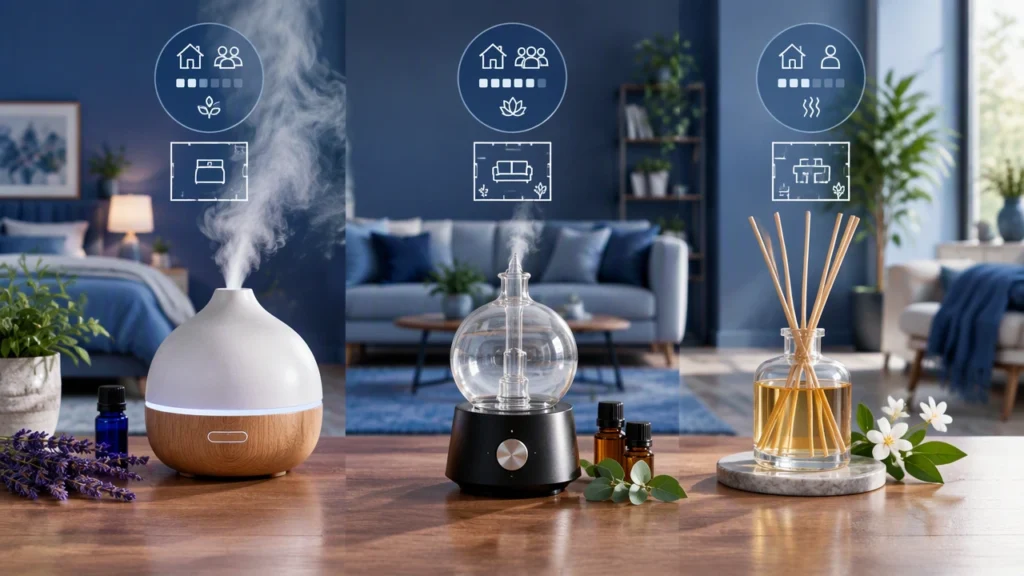
Choosing among the best essential oil diffuser types for home starts with matching the device to your room, routine, and scent goals. This guide compares ultrasonic, nebulizing, and reed diffusers for different room sizes and needs so you can decide with confidence. In short, aromaterapia works best when the delivery method fits the space and the moment.
Before comparing models, it helps to clarify what you want from a session. Do you want a subtle background note, a more noticeable therapeutic aroma, or a purely decorative option that releases scent passively? Your priorities will shape whether you lean toward a quiet ultrasonic mist, a stronger nebulizing stream, or the gentle, low-effort presence of reeds.
How ultrasonic diffusers work
An ultrasonic diffuser uses a small ceramic disc that vibrates at high frequency to break water and essential oil into a fine mist. Because it adds moisture to the air, it can be helpful in dry rooms and during colder seasons. Most models run quietly, are easy to clean, and offer features like timers, color lights, and adjustable output.
Ultrasonic diffusers shine in bedrooms, home offices, and small to medium living areas where you want a soft, even scent without overwhelming the room. They are also a good match for households that prefer shorter sessions, such as 30 to 90 minutes at a time, and for anyone who enjoys changing oils frequently. Because they dilute oils in water, the aroma is typically gentle and forgiving, which is ideal if you are sensitive to strong notes.
Best room sizes for ultrasonic models
- Small rooms up to 15 square meters: Use a low to medium setting for a calm background aroma.
- Medium rooms 15 to 30 square meters: Place the diffuser centrally and increase output slightly for even coverage.
- Open-plan areas: Expect a lighter scent footprint; consider pairing with a second unit or choosing a stronger method if you want a more present aroma.
Pros and trade-offs
Ultrasonic models are affordable, widely available, and simple to maintain. They add humidity, which can feel pleasant in dry climates. On the downside, they deliver a softer scent, require regular water changes, and need routine cleaning to prevent mineral buildup. If you prefer a stronger, drier aroma, a nebulizer may suit you better.
How nebulizing diffusers work
A nebulizing diffuser uses air pressure to atomize pure essential oil into a very fine vapor without water. This method preserves the full aromatic profile and can fill a room more quickly and noticeably than ultrasonic models. Many nebulizers include adjustable intensity knobs, letting you control how much oil is dispersed per session.
Because the scent is more concentrated, nebulizing diffusers are well suited to larger rooms, high ceilings, or spaces where you want a clear, immediate aroma, such as a living room during a gathering or a home studio before a creative block. They are also favored by people who want the most direct aromatic experience from their oils.
Best room sizes for nebulizing models
- Medium rooms 15 to 30 square meters: Use a low to medium setting for a present but balanced scent.
- Large rooms over 30 square meters: A nebulizer can cover the space more effectively than an ultrasonic unit, especially with higher output.
- Rooms with good airflow: Adjust intensity to account for ventilation so the aroma stays consistent.
Pros and trade-offs
Nebulizers deliver a stronger, more authentic aroma and can be more effective when you want a noticeable aromatic presence. They do not add humidity, which can be an advantage in already damp spaces. The trade-offs are higher oil consumption, occasional glass component care, and a bit more noise from the air pump. Running cost is higher than ultrasonic use, so many owners reserve nebulizers for focused sessions rather than all-day diffusion.
How reed diffusers work
A reed diffuser is a passive option: porous reeds sit in a bottle of scented oil and draw the fragrance upward, releasing it steadily into the air. There is no power source, no mist, and very little maintenance beyond flipping the reeds when you want a scent boost. This makes reed diffusers a calm, set-and-forget choice for entryways, bathrooms, and bedrooms where you want a consistent, low-level aroma.
Reed diffusers are especially useful in spaces where you prefer no noise, no electricity, and no regular refilling during the week. They are also a smart option for households with children or pets that are sensitive to mist or airflow, since the scent release is gentle and continuous.
Best room sizes for reed diffusers
- Small rooms up to 15 square meters: A standard reed set provides a pleasant, subtle scent.
- Bathrooms and hallways: A compact reed diffuser offers a steady background note without taking up space.
- Large rooms: Consider a larger bottle or multiple diffusers placed at different points to keep the aroma balanced.
Pros and trade-offs
Reed diffusers are quiet, simple, and decorative. They require almost no attention and run without power. The aroma is more subtle and slower to change, so they are not ideal when you want a quick, strong diffusion session. Oil blends can last for weeks, but intensity depends on room temperature, airflow, and the number of reeds you use.
How to choose by room size and needs
Start with the room you scent most often and the effect you want. For a calm bedroom routine, ultrasonic diffusion offers quiet comfort and a soft cloud. For a living room where you want a clear, present aroma, a nebulizer can provide stronger coverage. For a hallway or guest bathroom, reeds keep things simple and consistent.
Next, consider practical factors. If you plan to run a device for hours each day, an ultrasonic unit or a low-intensity nebulizer setting will keep running costs reasonable. If you want the purest aromatic expression of your oils with minimal dilution, a nebulizer is the more direct path. If you prefer a hands-off approach with no noise or mist, reeds are the easiest to live with.
Finally, think about maintenance and environment. Ultrasonic models need regular water changes and cleaning. Nebulizers benefit from occasional gentle cleaning of the glass chamber and careful handling. Reeds require only periodic flipping and replacement every few weeks to maintain performance.
A simple decision guide
- Choose ultrasonic for: quiet rooms, dry spaces, gentle aroma, budget-friendly use, and easy daily routines.
- Choose nebulizing for: larger rooms, strong aroma, no added humidity, and focused aromatic sessions.
- Choose reed for: passive scent, small spaces, low maintenance, and continuous background fragrance.
With these distinctions in mind, you can match the device to your space and enjoy a steady, satisfying routine. Whether you start with a single ultrasonic unit, add a nebulizer for bigger rooms, or place reeds in your entryway, the key is consistency and cleanliness. Use high-quality oils, clean your diffuser regularly, and adjust intensity to the size of the room and the mood you want to create.
If you are still unsure, try one method in your most-used room first. After a week, notice how the aroma feels, how often you refill, and how much maintenance you are willing to do. That real-world test will tell you whether a softer mist, a stronger vapor, or a passive reed setup best fits your home.
Quick tips for better results
- Start low: Begin with a conservative setting and increase only if you want more presence.
- Place wisely: Keep diffusers away from vents, direct sun, and busy walkways for steadier scent.
- Clean often: A quick rinse after each session helps prevent buildup and keeps aroma pure.
- Rotate oils: Switch blends to avoid scent fatigue and keep the experience fresh.
By matching the diffuser to your room and routine, you will get more from every bottle and enjoy a calmer, more intentional home atmosphere.