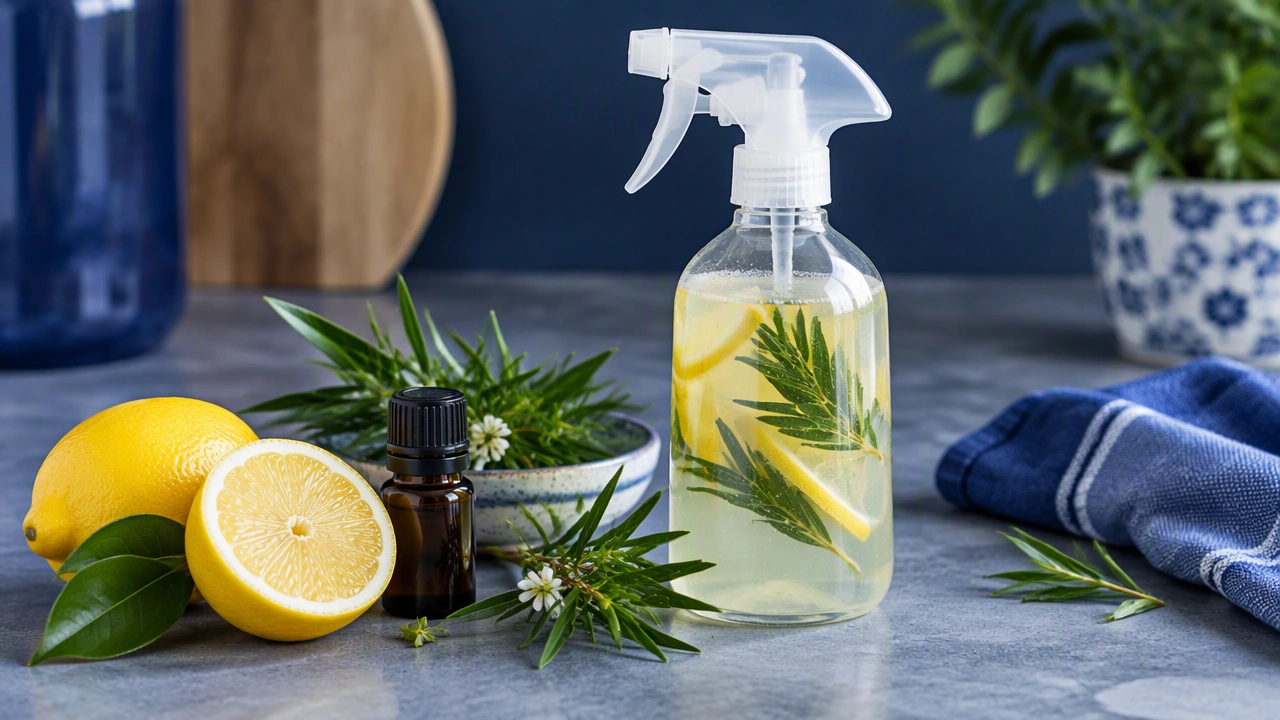
Aromaterapia at Home: DIY Natural Cleaning Sprays with Lemon and Tea Tree Essential Oils
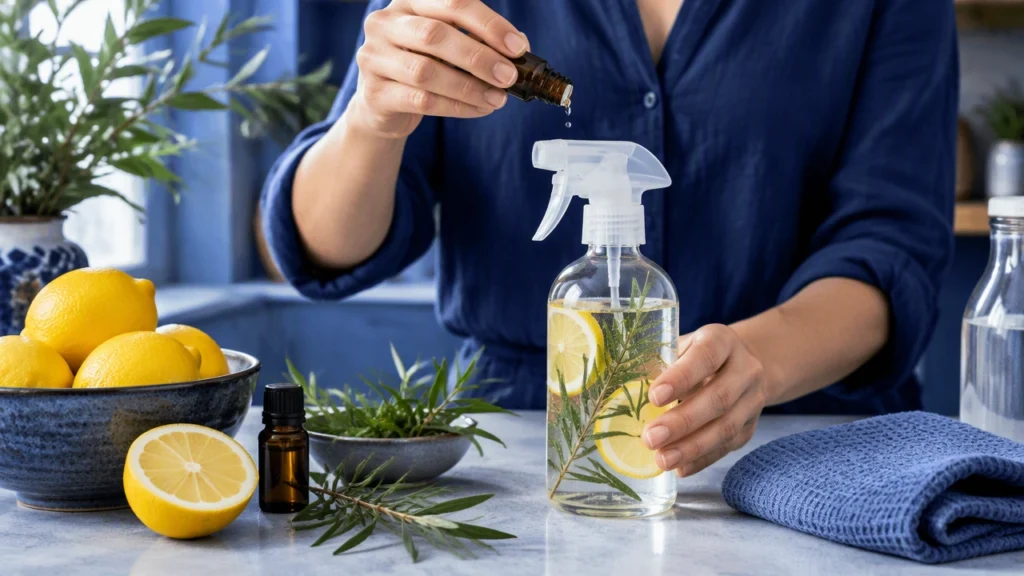
Aromaterapia can do more than scent a room; it can support a calmer, cleaner-feeling home. When you choose essential oils with purifying character, such as lemon and tea tree, and use them in simple, well-balanced recipes, you create surface sprays and air fresheners that smell bright and fresh without the harsh notes of synthetic fragrances. Below, you will find practical formulas, dilution guidance, and tips for safe use, all designed for everyday household routines.
These DIY natural cleaning sprays with lemon and tea tree essential oils are most effective on light, day-to-day messes. They are not disinfectants, and they should not replace medical-grade sanitizing when that is required. For sticky kitchen film, bathroom water marks, or dusty living spaces, however, a small batch made at home can be both satisfying and economical.
Why Lemon, Tea Tree, and Other Purifying Oils Work Well
Lemon essential oil has a crisp, uplifting aroma and is rich in naturally occurring monoterpenes. In home cleaning, it is prized for its fresh scent and its ability to cut through light grease, making it a good match for countertops, sinks, and sealed stone. Tea tree essential oil, sometimes called melaleuca, has a clean, herbaceous aroma and is widely used in natural cleaning blends because it is associated with a purifying feel. Together, lemon and tea tree create a balanced, bright, and grounded scent profile that feels both energizing and reassuring.
Other purifying oils can round out your blends. Eucalyptus offers a camphoraceous, airy note and is helpful in rooms that benefit from a clearer aroma, such as bathrooms. Lavender softens sharper notes and brings a calming quality to living areas. Rosemary adds a green, herbal facet that pairs well with lemon. Sweet orange or grapefruit can lift the blend and make it friendlier for spaces where you want a gentle, welcoming scent.
Safety and Dilution Basics
Essential oils are concentrated. For household sprays, a safe and effective dilution is typically between 1% and 2% for general surfaces, and up to 3% for areas where you want a stronger aromatic presence, such as trash bins or linen closets. As a rule of thumb, 1% equals roughly 5 to 6 drops of essential oil per 100 ml of carrier, while 2% equals about 10 to 12 drops per 100 ml.
- Sensitive surfaces: Avoid essential oils on unfinished wood, painted finishes, brass, natural marble, and other porous stones unless you first test a hidden spot.
- Pets and children: Keep sprays out of reach, ventilate rooms during and after use, and avoid direct application on areas where pets rest or eat. Some oils, including tea tree and eucalyptus, should be used cautiously around animals.
- Skin safety: Do not spray directly onto skin. If you want a room or body mist, use a formula designed for that purpose with appropriate dilution.
- Shelf life: Small batches are best made in small quantities and used within 4 to 6 weeks. Always label bottles with the date and ingredients.
DIY Recipes for Surface Sprays
All-Purpose Citrus Purifying Spray
This blend works well on sealed countertops, sinks, tiles, and appliances. The alcohol helps the spray dry quickly and disperse the oils evenly.
- 120 ml distilled water
- 60 ml rubbing alcohol or ethanol at 60–70% (optional, but helpful for dispersion and faster drying)
- 10 drops lemon essential oil
- 8 drops tea tree essential oil
- 2 drops rosemary essential oil
Combine the water and alcohol in a glass or high-quality PET spray bottle. Add the essential oils, cap tightly, and roll the bottle between your hands for 30 seconds to blend. Shake well before each use. Mist lightly onto a microfiber cloth rather than directly onto delicate surfaces, then wipe and allow to air-dry.
Bathroom Mineral Deposit Helper
For soap scum and light mineral buildup around sinks and taps, a vinegar-based spray can be useful. Avoid using vinegar on natural stone or delicate finishes.
- 120 ml white vinegar
- 120 ml distilled water
- 10 drops tea tree essential oil
- 6 drops eucalyptus essential oil
- 4 drops lemon essential oil
Shake well, spray onto the surface, and let it sit for 2 to 3 minutes. Wipe with a soft cloth, then rinse with plain water if the area is near food-contact zones or if the finish looks sensitive. The aroma dissipates quickly, leaving a clean, herbal impression.
DIY Recipes for Air Fresheners
Room and Linen Mist
This lighter mist is designed to freshen the air and fabrics without overwhelming the senses. Use a lower essential oil concentration for a subtle effect.
- 150 ml distilled water
- 1 tablespoon witch hazel or vodka (helps the oils disperse)
- 6 drops lemon essential oil
- 4 drops lavender essential oil
- 2 drops tea tree essential oil
Combine, shake, and mist upward into the center of the room or lightly over linens from a distance of at least 30 cm. Avoid saturating fabrics. This blend feels bright, calm, and clean, making it suitable for living rooms, bedrooms, and home offices.
Closet and Drawer Freshener
For small spaces, a sachet or cotton-pad approach is simple and long-lasting.
- 2 tablespoons baking soda or coarse salt
- 5 drops lemon essential oil
- 3 drops tea tree essential oil
- 2 drops sweet orange essential oil
Mix the oils into the baking soda or salt, place the mixture in a small dish or a cotton pad, and set it inside a drawer or closet. Refresh every 2 to 3 weeks by adding 2 to 3 drops of lemon or orange oil. The aroma remains gentle and unobtrusive, which is ideal for stored clothing and linens.
Blending Tips for a Balanced Home Scent
A well-balanced blend typically has a bright top note, a clean heart, and a soft base. Lemon and sweet orange provide the top notes, tea tree and eucalyptus form the clean heart, and lavender or rosemary add a grounding finish. If you prefer a more spa-like atmosphere, reduce the citrus slightly and increase lavender. For kitchens, emphasize lemon and a touch of rosemary to echo culinary herbs. In bathrooms, a little more tea tree and eucalyptus can reinforce a freshly cleaned impression.
Keep your essential oils stored in dark glass bottles, away from heat and direct sunlight. Over time, citrus oils can oxidize and become more likely to affect sensitive finishes, so using fresh stock and smaller batches helps maintain performance and scent quality.
Storage, Labeling, and Everyday Use
Use dark or opaque spray bottles to protect the blend from light. Label each bottle with the recipe name, date made, and key ingredients. Store sprays in a cool cabinet, away from children and pets. Shake before each use, and start with a light mist on a cloth rather than saturating the surface directly. For air fresheners, a single pump or two is usually enough; the aroma should support the room, not dominate it.
With these simple recipes, you can bring the gentle power of aromaterapia into daily cleaning. Lemon and tea tree, supported by complementary oils like lavender, eucalyptus, and rosemary, offer a fresh, purifying feel that makes your home smell clean while keeping your routine calm and intentional.